Proudly serving Phoenix, Glendale, Mesa, Scottsdale, Tempe, Chandler & surrounding areasCall or Text 24/7: 480-264-8023
Aerial view of residential neighborhoods, desert ridgelines, and arterial roads in Phoenix, AZ at sunrise.

ADAS Calibration in Phoenix, AZ for Forward-Facing Camera and Sensor Alignment

Phoenix Windshield Replacement Co. provides ADAS calibration in Phoenix for vehicles that need camera, radar, or lidar realignment after windshield replacement or sensor-related work. We perform windshield replacement, windshield repair, mobile windshield replacement, auto glass replacement and repair, car window replacement, side window replacement, rear glass replacement, and window regulator repair alongside calibration. Our certified ADAS technicians use OEM-grade static targets and dynamic road-test protocols while following manufacturer procedures for each make and model.

Phoenix pavement temperatures regularly push surface heat past 150 degrees, and the daily swing to cooler desert nights stresses windshield urethane bonds. If the camera bracket shifts even a few millimeters during glass removal, safety features can inherit an incorrect frame of reference. We verify alignment with manufacturer-specified procedures and provide documented pre- and post-scan results before the vehicle is released.

If another shop completed your glass work and you are unsure whether calibration was performed, we can run a diagnostic scan for stored ADAS fault codes. We also explain which sensors your vehicle uses and provide a written quote by VIN before work begins.

Phoenix Windshield Replacement Co. provides ADAS calibration throughout Phoenix, Scottsdale, Tempe, Mesa, Glendale, and the greater Maricopa County metro area.

★ ★ ★ ★ ★4.9/5 Average Rating · 20+ Years of Experience · Thousands of Customers Helped · Licensed & Insured · Residential & Commercial

ADAS Calibration Options & Benefits

What Is ADAS Calibration?

ADAS calibration realigns the cameras, radar units, and other sensors a vehicle uses to interpret the road. The procedure teaches each module where the sensor sits relative to the vehicle centerline, hood, wheels, and road surface after glass or related repair work changes that reference.

Modern vehicles built after roughly 2018 commonly rely on a windshield-mounted camera, often paired with front radar. Those sensors support forward collision warning, automatic emergency braking, lane departure warning, and adaptive cruise control.

Recent shop surveys cited in industry data report that near 40 to 53 percent of collision repairs need a calibration step. The correct method depends on the sensor, make, model, and manufacturer procedure, so some vehicles require static calibration, dynamic calibration, or both.

Benefits of Proper ADAS Calibration

Correct calibration restores the sensor reference points required by the vehicle's published repair procedure. It also creates a documented record of the scan results, target setup, and conditions used to verify the work.

  • Aligns the windshield camera to the vehicle centerline
  • Confirms forward collision warning detection and alert timing
  • Checks automatic emergency braking module status
  • Restores accurate lane-marking interpretation
  • Verifies adaptive cruise distance sensing
  • Identifies stored ADAS fault codes before release
  • Follows the manufacturer procedure selected by VIN
  • Provides pre- and post-scan documentation for your records
Phoenix Sensor Alignment

ADAS Calibration Services

We select the calibration service from the vehicle manufacturer's procedure rather than applying one method to every system. Our in-house capabilities cover windshield cameras, front radar, lidar, and rear-corner sensors, including vehicles that need more than one calibration method.

Static ADAS Calibration

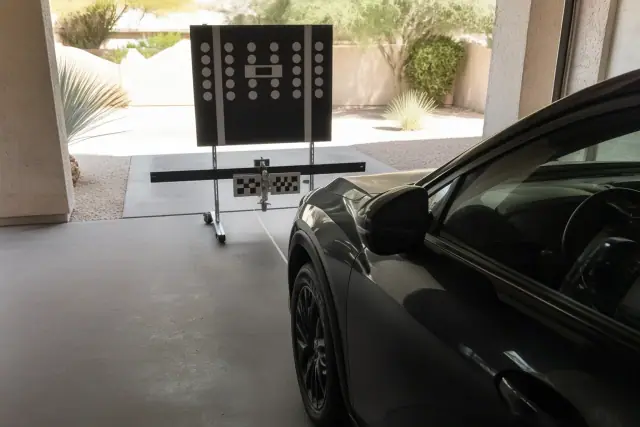
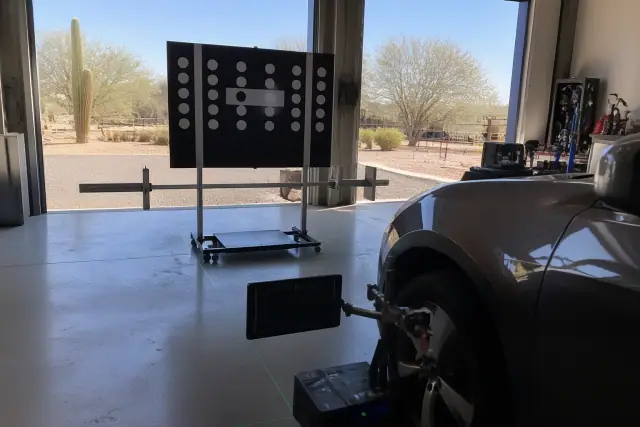
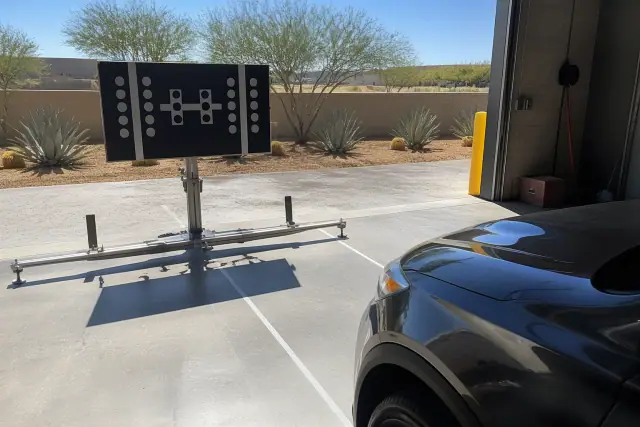
Static ADAS calibration target set up in front of a vehicle at a service bay in Phoenix, AZ.

Static calibration uses OEM-specified targets positioned at exact measured distances and heights in a controlled bay. A level floor, controlled lighting, and precise wheel alignment provide the reference, and the process typically takes 30 to 90 minutes depending on the targets and systems involved.

Request Estimate

Dynamic ADAS Calibration

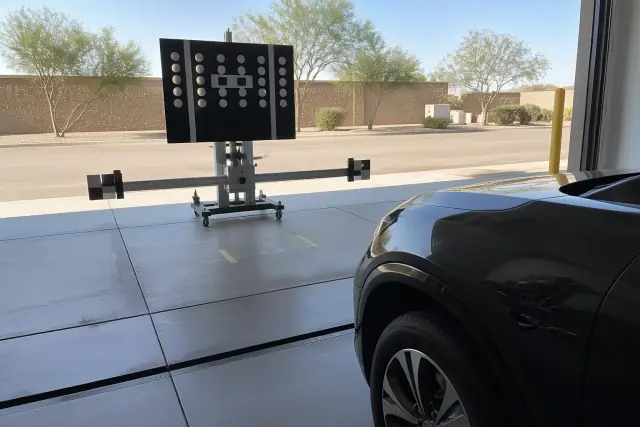
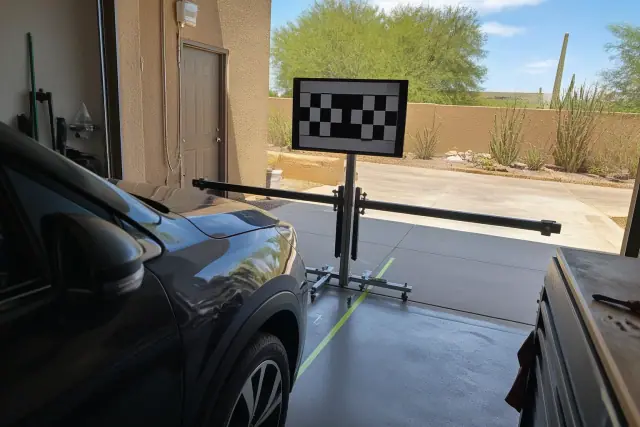
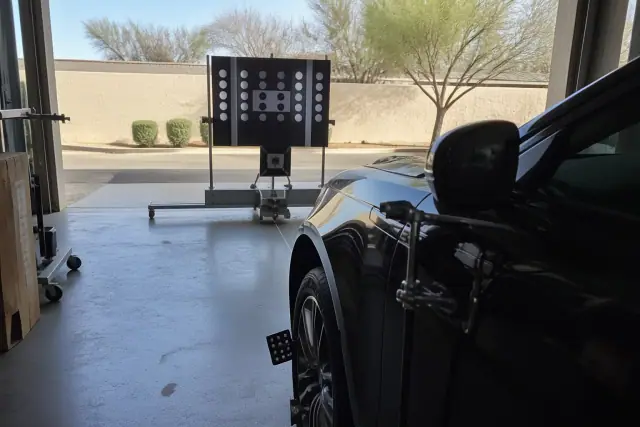
Digital calibration target stand aligned with a vehicle during an ADAS service in a Phoenix, AZ repair shop.

Dynamic calibration is a live road test performed while a scan tool communicates with the vehicle module. The manufacturer procedure usually calls for a steady 20 to 50 mph drive over a set distance, so we use well-marked Phoenix roads such as Bell Road and Camelback Road when conditions allow the module to complete alignment.

Request Estimate

Windshield Camera Calibration

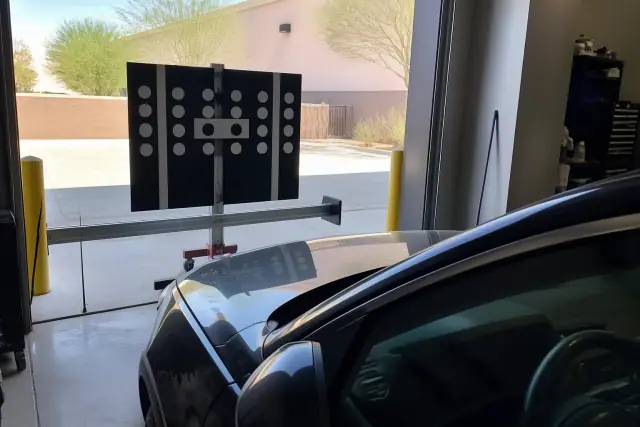
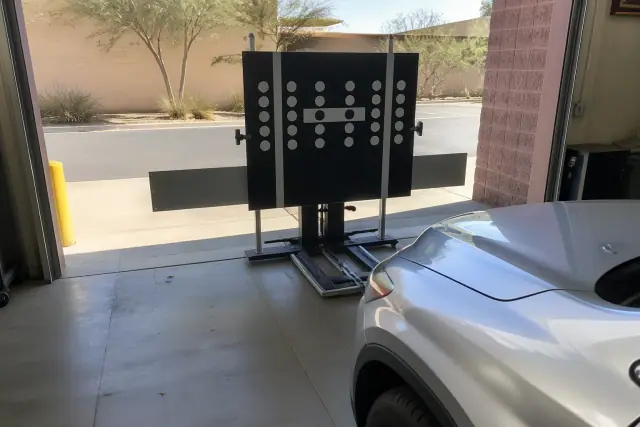
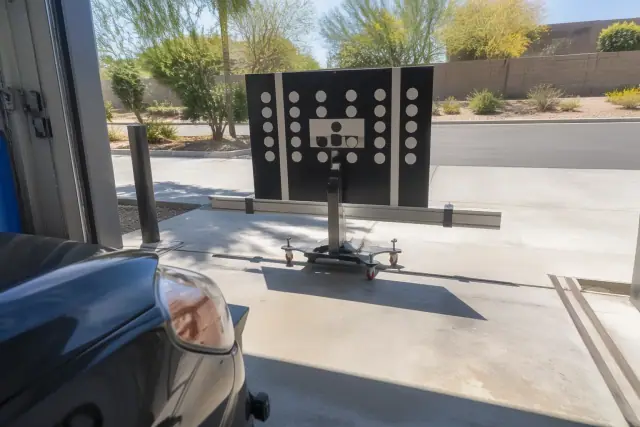
Windshield ADAS calibration target stand aligned to a vehicle in a Phoenix, AZ service bay.

After the correct OEM or OEM-equivalent windshield is set and cured, we align the forward-facing camera by static targets, a dynamic drive, or both. Correct bracket geometry, wedge angle, and optical clarity matter because distortion in the camera's viewing zone can prevent a successful calibration.

Request Estimate

Radar Calibration

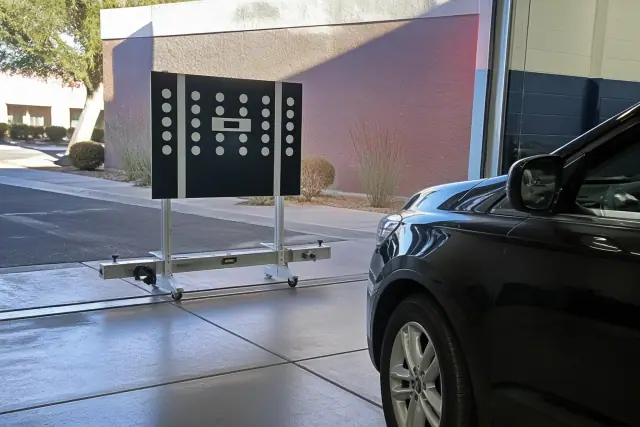
Radar calibration equipment aligned with a vehicle in a service bay in Phoenix, AZ.

Front radar units behind the fascia or grille emblem measure distance for adaptive cruise control and forward collision warning. We position a reflector at the manufacturer-specified height and angle, then confirm signal strength and alignment percentage through the scan tool.

Request Estimate

Lidar Calibration

Technician performing lidar calibration on a vehicle in a Phoenix, AZ service bay with desert scenery outside.

Lidar-equipped vehicles use sensors for 3D object mapping and require manufacturer-specific target boards. Their alignment tolerance can be within a fraction of a degree, so the target setup and platform procedure must match the vehicle precisely.

Request Estimate

Blind Spot Sensor Calibration

Digital calibration target stand set up for blind spot sensor calibration in a Phoenix, AZ service bay.

Blind spot monitoring relies on rear-corner radar sensors that can be disturbed during rear glass replacement or bumper work. We include a multi-sensor calibration check when rear glass or side window work occurs near a sensor mounting point.

Request Estimate
Methods & Sensors

Calibration Methods & System Types

Each ADAS module has its own positioning reference and calibration requirements. We use the VIN-specific procedure to determine the target, road-test, scan, and setup conditions required for the systems installed on your exact trim level.

Static ADAS calibration target set up in a service bay in Phoenix, AZ.

Static Target Calibration

A static setup creates a controlled geometric reference around a stationary vehicle. Exact measurements matter throughout the bay setup.

  • OEM-specified printed targets
  • Exact target distances and heights
  • Level calibration-bay floor
  • Controlled lighting conditions
  • Wheel alignment used as a reference
Request Estimate
Technician performing dynamic road-test ADAS calibration in front of a vehicle at a service bay in Phoenix, AZ.

Dynamic Road-Test Calibration

Dynamic procedures let the sensor learn from real road features while the scan tool monitors the module. The route and driving conditions must satisfy the manufacturer procedure.

  • Manufacturer-specified driving speed
  • Clearly marked traffic lanes
  • Steady traffic flow and set distance
  • Live scan-tool communication
  • Module confirmation of alignment
Request Estimate
ADAS camera calibration target stand set up in a service bay at a job site in Phoenix, AZ.

Forward Camera Systems

The windshield camera reads road markings and objects through a defined optical zone. Its bracket and viewing angle must agree with the vehicle's physical geometry.

  • Lane departure warning
  • Forward collision warning
  • Automatic emergency braking
  • Lane data for adaptive cruise control
  • Windshield optical clarity zone
Request Estimate
Radar and lidar ADAS calibration equipment set up in front of a vehicle at a service bay in Phoenix, AZ.

Radar and Lidar Systems

Radar measures object distance, while lidar provides 3D mapping on equipped vehicles. Both require target positioning that matches the installed sensor and manufacturer procedure.

  • Front fascia or grille-mounted radar
  • Manufacturer-specified reflector target
  • Signal strength and alignment percentage
  • Platform-specific lidar target boards
  • Distance sensing and 3D object mapping
Request Estimate
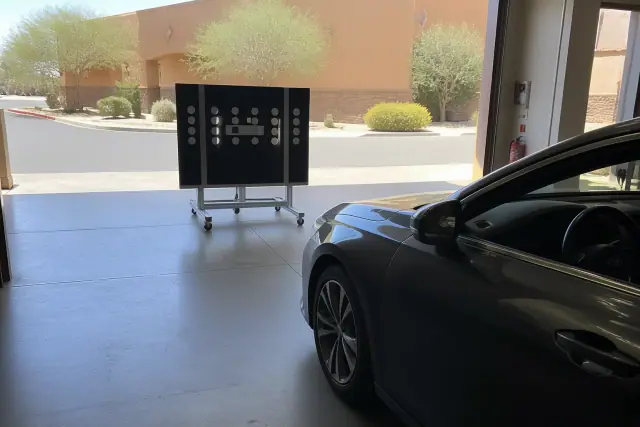
Digital calibration target stand aligned with a vehicle during an ADAS service in Phoenix, AZ.

Combined Multi-Sensor Calibration

Vehicles with multiple sensors may need a static setup followed by a dynamic drive cycle. Camera, radar, lidar, and blind spot modules are checked according to their individual procedures before final documentation.

  • Static and dynamic procedures when required
  • Camera-plus-radar verification
  • Rear-corner blind spot sensor checks
  • Pre- and post-scan fault-code review
  • VIN-specific sequence for every module
Request Estimate
Procedure Before Guesswork

Choosing the Right Calibration Approach

The right approach starts with the exact vehicle configuration, not a generic checklist. We identify the installed sensors, pull the procedure by VIN, confirm the required environment, and explain whether the job needs static targets, a road test, or both before providing the quote.

VIN-Specific Procedures

Calibration requirements can differ between trim levels of the same model. We pull the manufacturer's exact procedure by VIN so target placement, road speed, sequence, and verification match the vehicle in front of us.

OEM-Grade Calibration Equipment

Our certified ADAS technicians use manufacturer-specified target boards, calibration frames, reflectors, and scan tools that read and clear ADAS fault codes across major vehicle brands. The controlled bay meets the floor-level and lighting tolerances required for static work.

Documented Calibration Results

Your printed invoice records pre- and post-scan results, target distances, and ambient conditions. We quote by system count and calibration type upfront, and most single-system jobs dropped off in the morning qualify for same-day ADAS calibration.

What Sets Us Apart

Why Choose Us for Phoenix ADAS Calibration?

We perform calibration in-house alongside auto glass work, which keeps the glass, sensor setup, and final scan in one documented process. Phoenix-area dealership calibration often runs $400 to $600 or more per system once diagnostic and labor fees are added, while our independent shop prices each job by its actual system count and required method.

Request a Calibration Quote

ADAS Warning Lights

A dashboard warning light or stored ADAS fault code can indicate that a camera or radar module has lost its reference. The warning may appear immediately after repair or only after the vehicle has been driven.

False Lane Departure Alerts

A camera that is off by even a couple of degrees can pull lane warnings to one side or miss markings entirely. Misalignment becomes especially noticeable on wide Phoenix boulevards where faded striping already makes lane interpretation more demanding.

Collision Warning Errors

When camera and radar data do not agree on object distance, forward collision alerts may arrive at the wrong time. The same error can cause automatic emergency braking to activate unnecessarily or fail to respond when a real hazard appears.

Adaptive Cruise Distance Errors

Adaptive cruise control blends radar distance with camera lane data to manage speed and following distance. A misaligned system may brake too late or fail to hold a consistent following gap during highway driving.

Camera Bracket or Glass Shift

Removing a windshield can shift the camera bracket by an amount too small to see but large enough to change the camera's road reference. Incorrect bracket geometry, wedge angle, or optical distortion can also keep a camera from calibrating successfully.

Sensor Changes After Other Repairs

Bumper work, wheel alignment, suspension changes, rear glass replacement, and side window or regulator work near a sensor housing can disturb an ADAS reference. A diagnostic scan helps identify which modules need calibration after those repairs.

How it works

Our ADAS Calibration Process

Our process connects the initial sensor check, manufacturer procedure, physical calibration, and final documentation. Each step is selected for the vehicle's actual systems rather than a one-size-fits-all routine.

01.

Review the VIN Procedure

We identify the make, model, trim, and installed sensors, then pull the exact manufacturer procedure by VIN. This determines whether the vehicle needs a static setup, dynamic drive, or both.

02.

Run the Pre-Calibration Scan

A diagnostic scan checks ADAS modules for warning conditions and stored fault codes before calibration. We explain which sensors require attention and provide a written quote based on system count and method.

03.

Prepare the Vehicle and Glass

For windshield work, we verify that the correct OEM or OEM-equivalent glass is set and cured before aligning the camera. Static work also requires the prescribed floor, lighting, wheel, and target conditions.

04.

Position Targets and Reflectors

We set printed targets, reflector boards, or lidar boards at the exact height, angle, and distance required by the procedure. The calibration frame is aligned to the vehicle's geometry before the module learns its reference.

05.

Complete the Required Calibration

The technician runs the static calibration, dynamic road test, or combined sequence specified for the vehicle. During dynamic work, the scan tool communicates with the module until it confirms alignment under the required road conditions.

06.

Verify and Document Results

We complete a post-calibration scan, confirm required modules report zero fault codes, and perform the physical drive check when the procedure calls for it. The printed invoice records pre- and post-scan results, target distances, and ambient conditions.

Get Your Sensors Checked

Schedule an ADAS Calibration
Consultation

Request an ADAS calibration estimate after windshield work, sensor-adjacent repair, or a dashboard warning. We will identify the installed systems by VIN, explain the required method, and provide the cost before starting.

ADAS Calibration Help

ADAS Calibration FAQs

These answers cover Phoenix ADAS calibration cost, timing, equipment, warning lights, windshield work, and the difference between static and dynamic procedures. For vehicle-specific requirements, we check the VIN and installed sensors before quoting the job.

Call Our Experts

ADAS recalibration generally costs between $150 and $400 per system at an independent Phoenix shop. Multi-sensor vehicles that require both static and dynamic procedures can run $400 to $800; final cost depends on the make, sensor count, and required method, so we provide a written quote by VIN before work begins.

Arizona does not currently mandate ADAS calibration through a specific state statute, but manufacturers require it in their published repair procedures when a windshield, sensor, or related component is replaced or disturbed. Skipping a required procedure may affect safety-system performance, potential liability after a collision, and how an insurer evaluates the repair.

A single static calibration typically takes 30 to 90 minutes. A dynamic calibration can add another 20 to 40 minutes depending on traffic and module confirmation, while vehicles requiring both methods or several sensors can take two to three hours total.

Proper calibration can require manufacturer-specific target boards or reflectors, an ADAS-capable scan tool, and a level, properly lit bay that meets the published setup requirements. Dynamic procedures also require a clearly marked road driven at the specified speed, along with the correct procedure document for the vehicle's VIN.

Recalibration may be required after windshield replacement or repair near the camera mount, bumper work involving radar, wheel alignment or suspension work, and rear glass or side window work near sensor housings. An ADAS warning light is another reason to run a diagnostic scan for stored fault codes.

The vehicle may still be drivable, but any safety feature tied to the faulted sensor could be disabled or operating from inaccurate data. Have the system scanned as soon as possible so the stored code can be identified and the required repair or calibration explained.

Static calibration aligns sensors to measured targets in a controlled bay. Dynamic calibration teaches the module during a live road test while a scan tool communicates with it, and some vehicles require both methods in a specified sequence.

When we replace a windshield on a vehicle with a windshield-mounted camera, the required ADAS recalibration is built into the job rather than added as a surprise. We let the glass set and cure, then complete the static, dynamic, or combined procedure before returning the vehicle.

The camera relies on the windshield's bracket geometry, wedge angle, and optical clarity zone. We install OEM or OEM-equivalent glass with the correct specifications because distortion or an incorrect camera mount can prevent successful calibration.

Mobile windshield replacement can include calibration when the vehicle qualifies for a dynamic road-test procedure. Static calibration still requires our controlled, level shop bay, so we confirm the manufacturer requirement by VIN before scheduling the location.

Forward collision warning, automatic emergency braking, lane departure warning, adaptive cruise control, and blind spot monitoring can depend on calibrated cameras or radar sensors. The exact set of features varies by make, model, trim, and installed equipment.

Calibration specifications can differ even between trim levels of the same vehicle model. Pulling the manufacturer procedure by VIN identifies the correct sensors, target placement, speed, sequence, and confirmation steps without relying on guesswork.

The printed invoice records the pre- and post-scan results, target distances, and ambient conditions used during calibration. That documentation can help if an insurer asks about the repair or if a warning light returns later.